Low Impact, High Results: The Complete Guide to Joint-Friendly Workouts
Somewhere along the way, fitness culture decided that legitimate exercise must involve jumping, pounding and at least one apologetic knee. Untrue — and unkind to the millions of women whose joints, pelvic floors or preferences vote otherwise. Low-impact training builds cardio, strength and muscle at the highest levels; it simply subtracts the crash landings. Here is the complete, no-asterisks guide.

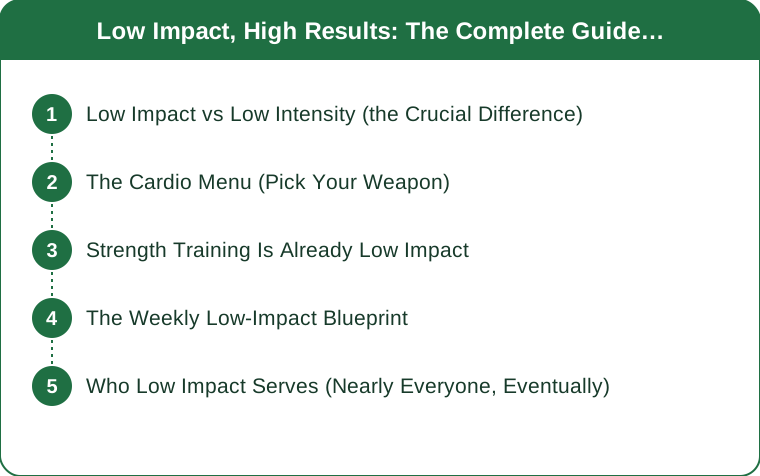
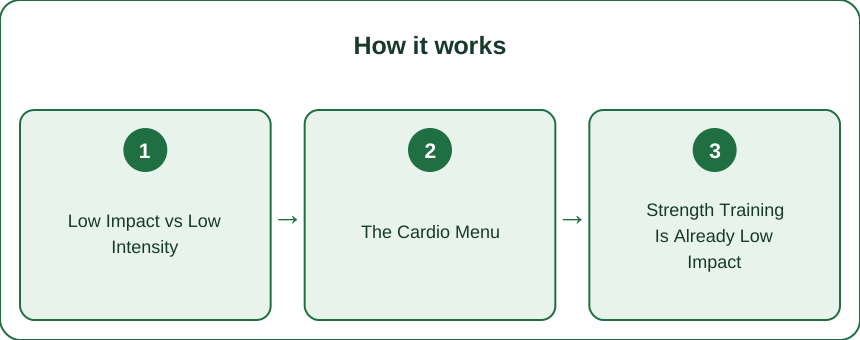
Low Impact vs Low Intensity (the Crucial Difference)
Impact is the collision — both feet leaving the ground and reuniting with it. Intensity is the effort. The fitness industry blurred them together, but a hill walk that has you breathing hard is low impact and high intensity; casual bouncing on a trampoline is the reverse. Once you separate the two, a whole world opens: you can chase serious effort — the thing that builds fitness — while choosing exactly how much force your joints receive. Effort is mandatory. Impact is optional.
The Cardio Menu (Pick Your Weapon)
The low-impact cardio hall of fame: brisk and incline walking (the treadmill at 12% incline humbles runners), cycling and spin, swimming and water aerobics (the pool erases up to 90% of body weight), rowing (86% of muscles, zero pounding), elliptical, and low-impact HIIT — intervals built from squats, step-outs, marches and fast punches instead of jumps. Every one can take your heart rate anywhere it needs to go. The joints simply are not invited to the collision.

Strength Training Is Already Low Impact
Quiet truth: classic strength training — squats, rows, presses, deadlifts, lunges — involves essentially zero impact when done with control. Better: it is the single most protective thing you can do for joints, because strong muscles are shock absorbers, taking load the cartilage would otherwise eat. Women avoiding weights to protect their knees have it exactly backwards: the leg press and the glute bridge are knee insurance. Two or three sessions a week is the premium payment.
The Weekly Low-Impact Blueprint
A complete week without a single jump: Monday — 30 minutes strength (squats to a chair, rows, presses, bridges). Tuesday — 30-minute brisk or incline walk. Wednesday — mobility and core: bird dogs, planks, hip openers. Thursday — low-impact intervals: 40 seconds hard cycling, rowing or fast-march cardio, 80 seconds easy, times 8. Friday — strength again. Weekend — the joy session: swim, long walk, bike ride, dance. Effort is 7-out-of-10 across the week. Results are indistinguishable from the jumping version — minus tomorrow’s knee commentary.
Who Low Impact Serves (Nearly Everyone, Eventually)
The obvious rosters: joint pain, arthritis, larger bodies where impact multiplies, postpartum recovery and pelvic-floor protection, injury comebacks, beginners building tissue tolerance. The overlooked roster: everyone else, on the days between hard sessions — elite athletes program low-impact days on purpose, calling it recovery and longevity. Choosing gentler force is not the retirement plan of exercise. It is how you make exercise something you never have to retire from.
Low impact is not the beginner track or the consolation prize — it is a complete, sustainable, joint-respecting way to get seriously fit, available every day for the rest of your life. Build your week from the menu above, keep the effort honest at 7-out-of-10, and let the jumpers have their burpees. You will be the one still training, comfortably, decades from now. That is the highest result there is.
Keep Reading
This article is for general informational purposes only and is not medical advice. Always consult a qualified health professional for guidance specific to you.