Why a Low-Impact Workout Can Spike Your Heart Rate Just as High as Running
Low-impact workouts sometimes carry an assumption that they’re automatically gentle on the cardiovascular system too, but impact level on the joints and cardio intensity are genuinely two separate variables, and a low-impact class can push heart rate just as high as running does.

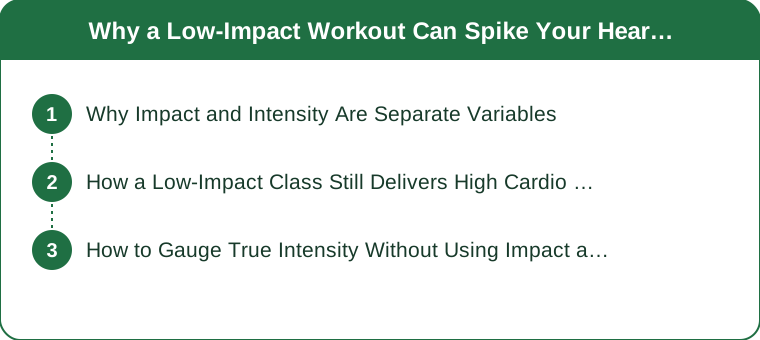
Why Impact and Intensity Are Separate Variables
The distinction: the impact-level-measures-joint-and-connective-tissue-loading-while-heart-rate-measures-an-entirely-different-cardiovascular-demand (the impact level of a movement measuring joint and connective tissue loading specifically, while heart rate and cardiovascular demand measure an entirely separate physiological system, meaning one doesn’t predict the other at all, per the low-impact-does-not-mean-low-intensity-guide logic — the impact-level-measuring-joint-and-connective-tissue-loading-specifically-while-heart-rate-measures-an-entirely-separate-physiological-system-meaning-one-doesnt-predict-the-other), and the reframe (a workout being gentle on the joints saying nothing at all about how hard it works the heart and lungs)).

How a Low-Impact Class Still Delivers High Cardio Intensity
The mechanism: the sustained-continuous-movement-without-a-full-recovery-moment-drives-heart-rate-up-regardless-of-whether-feet-leave-the-ground (sustained, continuous movement without a full recovery moment between exercises driving heart rate up steadily regardless of whether the feet ever actually leave the ground, per the low-impact-hiit-guide logic — the sustained-continuous-movement-without-a-full-recovery-moment-driving-heart-rate-up-steadily-regardless-of-whether-the-feet-ever-leave-the-ground), and the frame (continuous movement, not jumping, being the actual driver of cardio intensity in a well-designed low-impact class)).
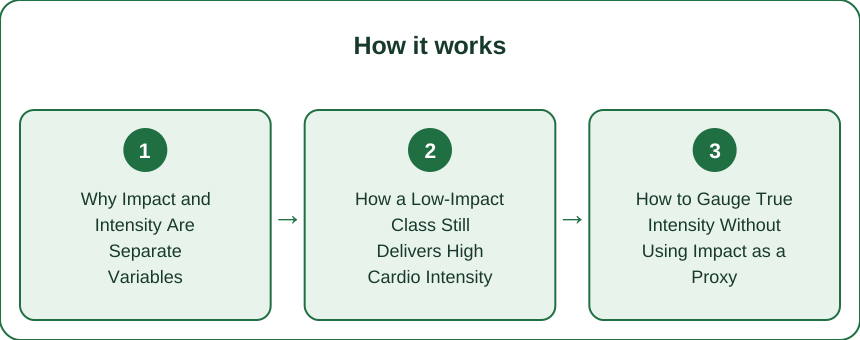
How to Gauge True Intensity Without Using Impact as a Proxy
The better gauge: the use-a-heart-rate-monitor-or-perceived-exertion-scale-directly-rather-than-assuming-low-impact-equals-low-effort (using an actual heart rate monitor or a perceived exertion scale to gauge true intensity directly during a low-impact session, rather than assuming impact level tells you anything about effort, per the low-impact-workouts-for-sensitive-knees-guide logic — the using-an-actual-heart-rate-monitor-or-perceived-exertion-scale-to-gauge-true-intensity-directly-rather-than-assuming-impact-level-tells-you-anything-about-effort), and the frame (a direct intensity measurement replacing impact level as the actual gauge of how hard a session really was).
Impact level measures joint and connective tissue loading specifically, while heart rate and cardiovascular demand measure an entirely separate physiological system, which means a workout being gentle on the joints says nothing at all about how hard it works the heart and lungs. Sustained, continuous movement without a full recovery moment between exercises drives heart rate up steadily regardless of whether the feet ever leave the ground, which is why using an actual heart rate monitor or a perceived exertion scale to gauge true intensity directly is far more reliable than assuming low impact automatically means low effort.
Keep Reading
This article is for general informational purposes only and is not medical advice. Always consult a qualified health professional for guidance specific to you.