Low-Impact Strength Training: Building Real Muscle Without a Single Jump
Low-impact is not low-intensity — the distinction the fitness industry keeps blurring — and muscle grows from tension, not from leaving the ground. The low-impact strength guide: the physiology, the loading menu and the program that builds real strength on sensitive joints.

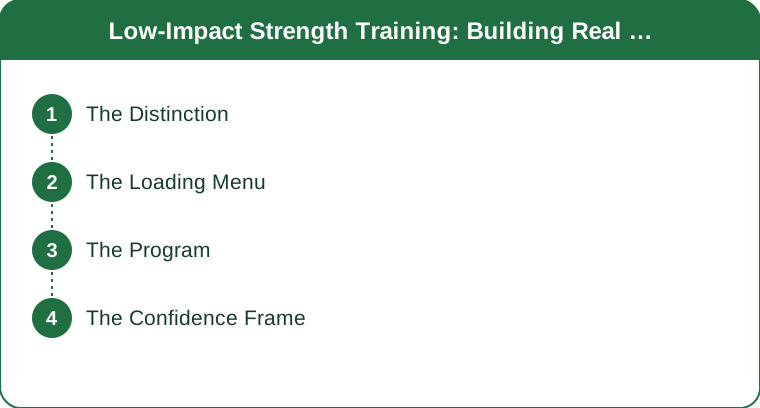
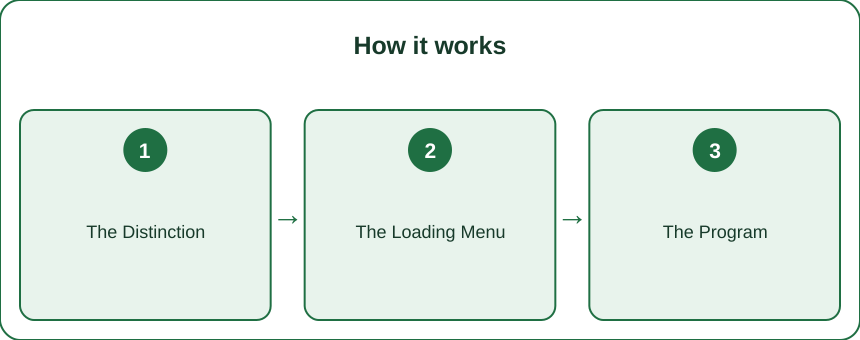
The Distinction
Impact versus intensity, untangled: the definitions (impact being the landing forces — the jumps, bounds and pounding; intensity being the effort and load — completely independent variables; the heavy slow squat: zero impact, maximum intensity), the muscle-growth truth (hypertrophy driven by tension, effort and volume — none requiring flight; the physiology from the strength chapters caring nothing about jumping), the who-this-serves list (the joint-sensitive, the arthritis-managing from the arthritis chapters, the postpartum floor-protecting tier, the larger-bodied beginner, the downstairs-neighbor-having — the huge population the jump-happy fitness culture under-serves), and the myth retirement (the no-pain-no-gain conflation of soreness, sweat and impact with results — the quiet heavy set outbuilding the loud plyometric circuit for pure muscle; the evidence unambiguous).
The Loading Menu
Joint-friendly tension sources: the free-weight core (the goblet squats, RDLs, presses and rows from the lift chapters — the controlled tempo versions; the strength canon being already low-impact), the tempo-and-pause amplifiers (the slow eccentrics and paused reps that multiply intensity without adding load — the slow-tempo doctrine as the sensitive-joint superpower; the three-second lowering that makes light weights heavy), the machine tier (the guided paths that remove balance demands — the leg press, the chest press, the machine-honesty doctrine; the arthritis-friendly consistency of fixed paths), the band-and-cable layer (the ascending resistance that’s gentlest at the joint’s weakest angles — the band chapters’ menu), the isometric wing (the wall sits, planks and holds — the zero-movement tension for the crankiest joints; the rehab world’s favorite), and the water option (the pool’s resistance-without-gravity from the aquafit chapters — the lowest-impact loading that exists).

The Program
The sensitive-body build: the frequency-and-structure (the two-three full-body sessions from the beginner doctrine — the pattern coverage: squat, hinge, push, pull, carry; every pattern having a low-impact version), the progression rules (the load-reps-tempo ladder — the overload doctrine at controlled speeds; the progress that never requires jumping: heavier, more reps, slower, deeper), the range-of-motion respect (the pain-free range trained and gradually expanded — the arthritis-and-comeback doctrine; the partial rep being a full rep for today’s joint), the effort honesty (the sets taken near-hard — the low-impact license not extending to low-effort; the last-reps-challenge standard that growth requires), the cardio companion (the walking, cycling and swimming tier for the engine — the low-impact week complete without a single landing), and the flare-day protocol (the sensitive day downshifted to isometrics-and-bands — the swap-not-stop rule; the traffic-light system from the condition chapters).
The Confidence Frame
Owning the approach: the results honesty (the low-impact lifter building the same muscle on the same timeline — the before-afters that never mention jumping; the strength standards reachable entirely on the ground), the impact-later option (the bone-density case for SOME impact from the bone chapters — the heel drops and low hops added by choice when joints allow, never as a requirement; the graded ladder from the leakproof chapters if wanted), the class-navigation notes (the ‘low-impact modifications’ asked for in any class — the step-jack literacy; the instructor’s job per the modification doctrine), the identity close (the low-impact strength athlete being fully an athlete — the quiet training that’s a choice and a strategy, not a lesser version; the joints preserved being the decades-long win per the longevity doctrine), and the invitation (the goblet squat and RDL learned this week — the two moves that start everything; the ground never left, the strength fully arrived). Tension over impact, effort over noise, progress on the ladder: the muscle, quietly built.
Muscle grows from tension, not jumping — heavy controlled lifts, slow tempos, machines, bands and isometrics build the same strength on sensitive joints. Low-impact never means low-effort.
Keep Reading
This article is for general informational purposes only and is not medical advice. Always consult a qualified health professional for guidance specific to you.