How to Actually Progress a Low-Impact Workout Without Adding Impact
Low-impact training solves the joint-stress problem but creates a new one: how does a workout keep getting harder without adding the jumping or pounding that made it high-impact in the first place? The answer lies in variables that have nothing to do with impact at all.

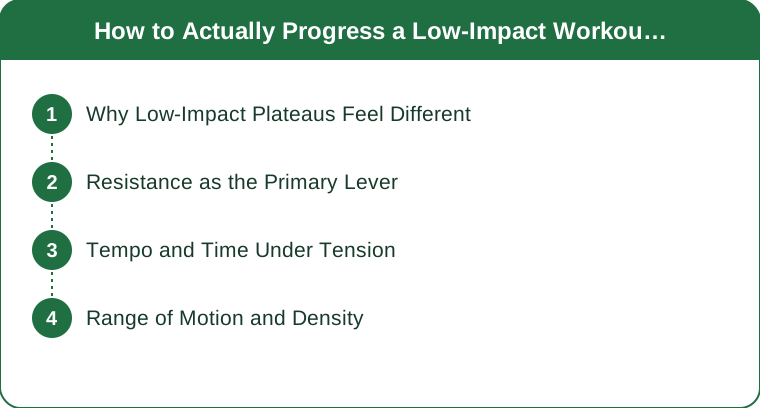
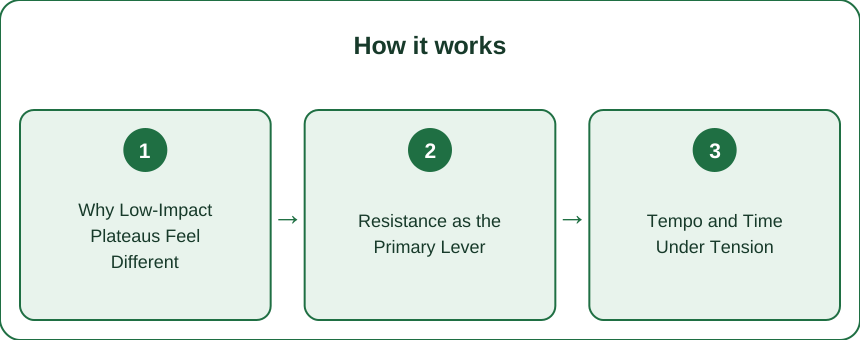
Why Low-Impact Plateaus Feel Different
The core issue: the the-impact-equals-progress-myth (a common but false assumption that difficulty can only increase by adding more impact, when impact and intensity are actually separate variables), the the-comfort-zone-drift (low-impact routines being especially prone to staying at the same comfortable intensity indefinitely, since there’s no natural cue like harder landings forcing a change), the the-plateau-invisibility (a low-impact workout can feel similarly challenging in the moment for months while delivering steadily less actual training stimulus, since the difficulty never changes)).
Resistance as the Primary Lever
The main tool: the the-added-external-load (gradually increasing resistance band tension, dumbbell weight, or added weight vests provides a direct, joint-friendly way to increase demand on the same low-impact movement pattern), the the-body-position-leverage-change (adjusting body position or lever length, like extending an arm further from the body during a resistance exercise, increasing difficulty without adding any impact), the the-unilateral-progression (moving from a bilateral to a single-limb version of an exercise substantially increasing stability and strength demand using the same equipment).

Tempo and Time Under Tension
The overlooked variable: the the-slower-eccentric-phase (deliberately slowing the lowering or lengthening phase of a movement increasing muscular demand significantly without any added load or impact), the the-pause-at-end-range (adding a brief pause at the most challenging point of a movement increasing time under tension and difficulty), the the-tempo-progression-plan (systematically slowing tempo over successive weeks as a built-in progression path that requires no new equipment).
Range of Motion and Density
The remaining levers: the the-full-range-emphasis (working toward a fuller, more controlled range of motion in a low-impact exercise increasing difficulty and effectiveness compared to a partial, easier range), the the-reduced-rest-density-increase (shortening rest periods between sets increasing metabolic demand and overall session intensity without touching impact at all), and the frame (low-impact workouts progress through resistance, tempo, range of motion, and rest manipulation instead of impact — a plateaued routine almost always means one of these four levers has been left untouched for too long.)
The assumption that low-impact training has a natural ceiling, that difficulty can only really increase by adding pounding or jumping, misses that impact and intensity are entirely separate variables. Resistance is the most direct lever available: gradually adding band tension, dumbbell weight, or a small vest, adjusting body position to lengthen the working lever, or progressing from a bilateral to a single-limb version of the same movement all increase demand without touching impact at all. Tempo offers a second, often-overlooked path, since slowing the eccentric phase of a movement or adding a brief pause at its hardest point meaningfully raises difficulty using the exact same exercise and equipment already on hand. Range of motion and rest periods round out the toolkit, working toward a fuller controlled range and shortening rest between sets both raising the training stimulus. A low-impact routine that’s stopped feeling harder over time almost always means one of these four levers, resistance, tempo, range, or rest, has simply gone untouched for too long.
Keep Reading
This article is for general informational purposes only and is not medical advice. Always consult a qualified health professional for guidance specific to you.