How to Keep Training With Low-Impact Cardio During Injury Recovery
Quick Answer: Many low-impact cardio options — cycling, swimming, upper-body ergometers — can be used safely during recovery from lower-body injuries, as long as the specific movement doesn’t load or aggravate the injured area. Always confirm with the treating professional first.
An ankle sprain or knee tweak doesn’t have to mean weeks of zero training. The right low-impact option can maintain fitness while the injured area actually heals — you just have to choose carefully.

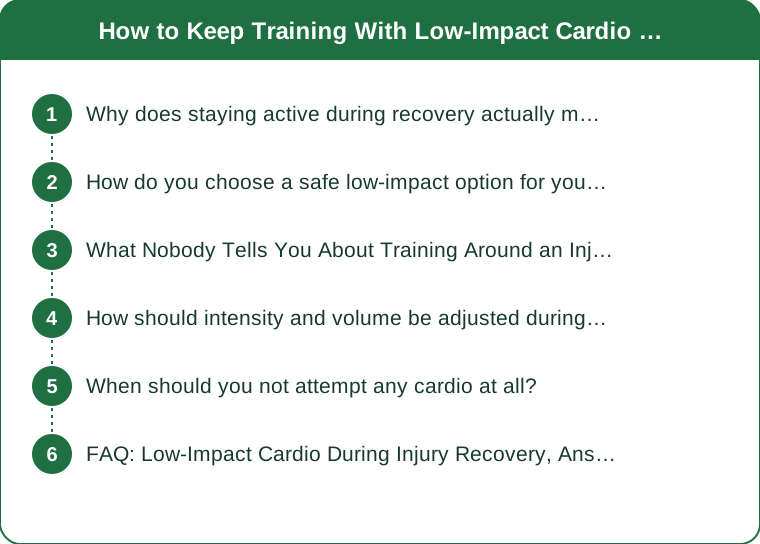
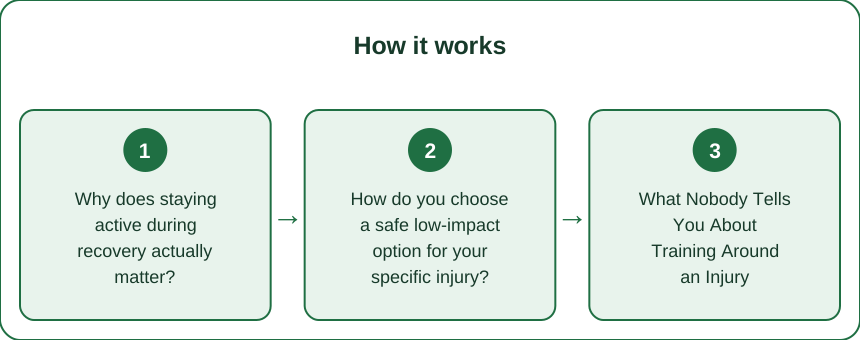
Why does staying active during recovery actually matter?
Complete inactivity during recovery can lead to faster loss of cardiovascular fitness and unaffected-muscle strength than most people expect — often measurable within just 1-2 weeks of total rest. Maintaining safe movement elsewhere in the body helps preserve overall fitness and can support circulation to the healing area, within the limits your provider sets.
How do you choose a safe low-impact option for your specific injury?
Match the tool to the injury: a stationary bike or rowing machine often work for many upper-body injuries; an upper-body ergometer (arm bike) or pool-based walking/swimming often work for many lower-body injuries, since water reduces joint loading substantially. The right choice depends entirely on which movement patterns don’t stress the injured area — this is where your physical therapist or doctor’s specific guidance matters most.
What Nobody Tells You About Training Around an Injury
The biggest mistake isn’t choosing the wrong equipment — it’s assuming ‘no pain during the activity’ means it’s automatically safe. Some injuries can be aggravated by cumulative low-grade stress that doesn’t hurt in the moment but shows up as increased pain or swelling hours later. Starting at low intensity and duration, then monitoring the following 24 hours before increasing, is safer than judging safety by the workout itself.

How should intensity and volume be adjusted during recovery?
Start meaningfully below your pre-injury capacity — often 50% or less of typical duration and intensity in the first return-to-activity sessions — and increase gradually only if there’s no increased pain or swelling in the 24 hours following each session. This conservative approach protects healing tissue while still providing real cardiovascular benefit.
When should you not attempt any cardio at all?
If a provider has specifically restricted weight-bearing or movement, or if any attempted movement causes sharp or worsening pain, that’s a signal to hold off entirely rather than work around it. This is general information, not medical advice — always follow your treating professional’s specific restrictions over general guidance like this.
FAQ: Low-Impact Cardio During Injury Recovery, Answered
Can I do upper-body cardio with a lower-body injury?
Often yes, with clearance — an arm ergometer or seated upper-body circuit can maintain cardiovascular fitness without loading an injured leg, ankle, or foot.
Does swimming work for most lower-body injuries?
Water substantially reduces joint loading, making pool-based movement a common recommendation, though some injuries (open wounds, certain post-surgical restrictions) may still require avoiding water — check with your provider first.
How do I know if I’m progressing too fast during recovery cardio?
Increased pain, swelling, or stiffness in the 24 hours after a session is the clearest signal to scale back — progress should feel steady, not accompanied by worsening symptoms.
TL;DR:
- Total inactivity during recovery can cost fitness faster than most people expect — safe low-impact options often exist
- Match the tool to the injury: bike/rower for many upper-body injuries, arm ergometer/pool work for many lower-body injuries
- ‘No pain during the activity’ isn’t the same as ‘safe’ — monitor the 24 hours after, not just the session itself
- Start at 50% or less of prior capacity and progress gradually
This is general information, not medical advice — get specific clearance and guidance from your treating provider before resuming any cardio during recovery.
Keep Reading
This article is for general informational purposes only and is not medical advice. Always consult a qualified health professional for guidance specific to you.